

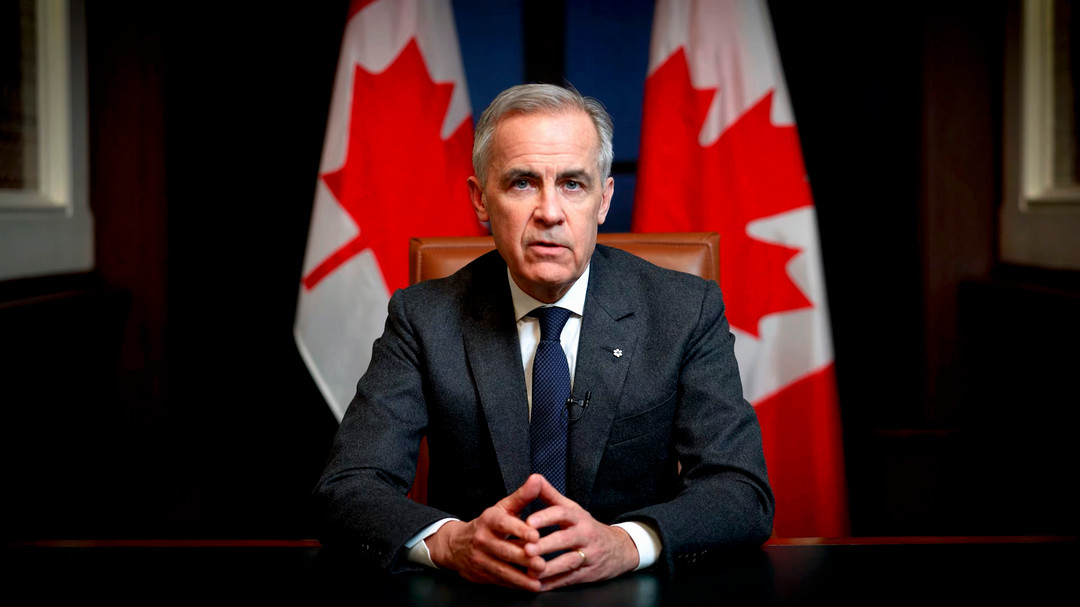
How is Prime Minister Carney Doing in Reshaping Government?
The Carney government has faced enormous challenges and equally high expectations. Prime Minister Carney has effectively taken on an international leadership role in the resistance to Trump while, at home, reversing course on several signature Trudeau-era policies. He has also inherited a range of governing imbalances that have plagued Ottawa for more than a decade. Together, these challenges raise an important question: how well is Prime Minister Carney navigating this pivotal moment for Canada?
By Kevin Lynch and Jim MitchellDownload the JSGS Policy Brief
Download the Disussion Questions
It has been an eventful year and a half since the Mark Carney Liberal government was elected. The Carney government has faced enormous challenges and equally big expectations. It has been quite a ride so far, with Prime Minister Carney effectively taking on the international leadership of the Trump resistance while, at home, he has reversed course on many of the Trudeau era’s signature policies.
Over the past year, Trump has savoured the role of ‘global arsonist’ as he torches free and fair trade, defence alliances, democratic norms, and respect for the sovereignty of other nations. And Canada has been particularly in his sights as he dismissed the value of CUSMA, imposed high tariffs for outrageous reasons on key sectors of our economy and mused about absorbing Canada as the 51st state.
But some of the challenges Carney must address in this pivotal moment are also home grown and longstanding. Canada has been seriously under-performing its enormous potential for a decade or more and government has been a significant part of the problem. While this observation may not be revelatory to many, the problem itself goes well beyond government policies – it is increasingly rooted in imbalances in how government operates, how it is wired to work.
A multitude of governing imbalances that have plagued Ottawa for over a decade are now Carney’s to deal with. These include the extraordinary centralization of power in the PMO; the hollowing out of Cabinet and diminution of the role of cabinet ministers; the dominance by political staff over the non-partisan Public Service; the lack of oversight by poorly-functioning Parliamentary committees; and an inability to both consistently execute on policy promises and deliver services.
Our book (“A New Blueprint for Government: Reshaping Power, PMO and the Public Service”) is about how government works. It identifies what doesn’t work well, and sets out where change is needed and why. It largely overlaps with the election of the Carney government and naturally raises the question: how is Prime Minister Carney doing in reshaping government to deal with these imbalances?
These imbalances were accentuated by excessive political and policy short-termism during much of the Trudeau government. Redistribution, government spending and regulation became the focus of policy rather than investment, growth and productivity. Structural economic problems were allowed to fester, leading to a decade of flatlining of per capita real incomes (living standards) and exacerbated an affordability crisis.
Fixing these imbalances is a question of political will and public pressure - the government must recognize the need for change, and the public must demand change.
In practice, balanced governing is a team sport with strong leadership and the engagement of all the players. This means to delegate: let cabinet ministers be ministers again; give them responsibility, authority and accountability. It means to bring focus – too many priorities means none, resulting in weak policy execution, sloppy delivery of essential services and lost public trust. It also means to think productivity and growth – policy has to shift to growing the economy and increasing per capita incomes. And it certainly means to rebuild ‘state capacity’ – reform the Public Service by rewarding results over process, risk-taking over excessive oversight, entrepreneurship over box-checking, and leadership over followership.
Progress in tackling Canada’s imbalances
So, after eighteen months in power, how is the Carney government doing in reshaping how government works? This is a timely but layered question, with a number of different aspects. They include where has the government acted on its policy agenda, and where it has not? What have we learned about PM Carney’s approach to governing? And, has the government embraced a smaller, more focused and more streamlined federal government with a thinner, flatter and more results-orientated Public Service? We discuss six of those aspects below.
1. Dealing with a hegemonic neighbour – Trump, tariffs and sovereignty
How has the Prime Minister performed the near-impossible task of managing the trade and sovereignty threats posed by President Donald Trump – something Carney presented himself as uniquely capable of doing? Clearly, free trade is an anathema to President Trump, whose approach is 19th century mercantilism with unilateral tariffs as the cudgel. In quasi-agreements with the EU, UK, Japan and others, this has translated into baseline U.S. tariffs of 10-15 percent and sector specific threats where the intent is cajoling firms and capital to relocate to the US.
Between Canada and the U.S., the negotiating process from the start was unusual. Trump has comingled the renegotiation of CUSMA with a series of punitive sectoral tariffs, and the Carney government made a number of unilateral concessions without getting anything in return. Trade talks languished until July, when Trump unleashed a new round of higher sectoral tariffs and negotiations began in earnest. Canada appeared willing to offer some major concessions, but Carney halted negotiations at the last minute, declaring that our sovereignty was at risk, that we were in a trade war, and that Canada would retaliate.
The Prime Minister was absolutely right to walk – sovereignty is a red line not to be crossed. And Trump does not hold all the cards in this trade war, as he faces three serious political risks – a seemingly forever war in Iran and its impact on American prices, the mid-term elections where he could lose Republican control of Congress, and a nascent bond market revolt given skyrocketing debt. The rupture in international affairs Carney described so eloquently at Davos has descended onto Canada-US relations. The question now is how the Prime Minister stick-handles a trade war and sovereignty threats from an unpredictable Trump and the reality of our interconnectedness with the American market.
2. Dealing with policy imbalances – an under-performing Canadian economy
Another rupture, this one domestic, has been Carney reversing course on many of the Trudeau government’s signature economic policies.
The about face is striking: a new focus on productivity and growth rather than redistribution; a fast-tracking of major infrastructure projects; a promise to end internal trade barriers; a commitment to expand energy and natural resource development; a call for trade diversification with like-minded middle powers in Europe and Asia; a recognition that we need capital flowing into Canada not pouring out; and, an understanding that Canada’s immigration system had been undermined and needed fixing. In other words, the complete opposite of what we have done for over a decade.
Carney’s vision is that this macro-rebalancing is essential to protect our economic sovereignty and to rebuild our resiliency in an era of global disruption.
But the policy challenge for his government is less the direction than its timely and effective execution. And the first steps, announced in September, were rather eye-catching – an international Investor Summit, a ‘productivity mega deduction’ which significantly lowers the marginal cost of capital investment, and legislation to reduce and simplify the regulatory burden in various sectors and geographic areas. Investors appear to be paying attention, but they will now want to see real projects to invest in and assurance that approval times are faster and the regulatory process is more certain.
3. Dealing with excessive centralization in governing – the PMO problem
One aspect of governing where there has been no evident rupture is the excessive centralization of decision making in the PMO. The Government’s ambitious agenda is being driven and actively managed by the Prime Minister, a small group of senior advisors and a few ministers. This despite naming a large ministry of 39 ministers and secretaries of state. Even policy announcements are typically made by ‘the Centre’ with the
responsible minister in the background.
While such a centralized approach may work in the short term in a crisis, it is not tenable or sustainable longer term in an institution as large and complex as the federal government. This is particularly so today for a government undertaking a transformational agenda for change and facing enormous challenges from beyond our borders. Governing well takes a team effort, where responsibility and authority are delegated to ministers and senior officials who are capable and have the confidence of the Prime Minister.
4. Dealing with sovereignty and global power shifts - standing up for Canada
The Prime Minister has framed a bold new international agenda – an alignment of like-minded middle powers in a world of threatening hegemons - through major speeches at Davos and the European Parliament, by travelling extensively to forge new partnerships, and by standing up to Trump’s bullying when others failed to do so. The world, and Trump, have noticed. He has also backed NATO with a massive commitment of new defence spending and has been a steadfast ally of Ukraine.
The proof is in the implementation pudding. Can Canada realize the potential of those new partnerships by actually diversifying our trade with other middle powers while cementing new security relationships with European allies and Asian partners such as South Korea and Japan? And can we spend tens of billions of new dollars effectively to strengthen the Canadian Armed Forces and build world class defence tech sectors?
The Prime Minister has eloquently framed a new middle powers vision and raised Canada’s stature in world capitals to a level not seen in decades. He has stressed the urgent necessity of diversifying on trade and security dependence on the U.S. Now is the time to make it a reality.
5. Dealing with growing fiscal imbalances – strong balance sheets create advantage
The global bond vigilantes are circling again, attracted by high debt and deficits in the US, France, UK and Japan and the consequences for energy supply chains of the Iran war. Given our trade war with the US, they will no doubt be closely following Canada’s fiscal situation and growth prospects.
Now is the time for the Carney government to implement credible fiscal anchors. Rigorous fiscal anchors were an unfortunate omission in the government’s first budget which was characterized by high deficits, high spending and huge borrowing. Now is also the time to improve fiscal transparency, particularly how multi-year defence spending will be financed and why there is such a large and growing gap between gross government debt and net debt. Having a strong balance sheet in today’s disruptive world protects against bond market assaults that would raise borrowing costs for all Canadians. The upcoming Fall 2026 Budget is the opportunity to stand out globally for our fiscal probity and resilience.
6. Dealing with renewal of the public service – an institution that really matters and must change
The federal Public Service has developed over the last decade an institutional culture more comfortable with process than action, more attuned to consultations than getting things done, and more inclined to risk-aversion than entrepreneurship. The delivery of core services by departments has also been a problem for too long. Part of the cultural malaise is due to a government-imposed operating environment of endless oversight, opaque accountability and always wondering what PMO will decide as all advice is filtered through political staff to PMO.
Yet, reforming and renewing the Public Service has not featured prominently in Prime Minister Carney’s agenda for change. There have been across-the-board reductions in the number of public servants, but no program review exercise to cut programs and guide these reductions. Six special-purpose agencies have been created to enable speedier implementation in areas central to the government’s agenda rather than embarking on lasting reforms of government operations.
Real reform requires fixing a Public Service that is simply too big, too complicated, too over-burdened with watchdogs and red tape, and underequipped with the skills needed in modern government. Only the Prime Minister and his team can drive the reforms in the public service that are urgently needed.
Execution may be the biggest governing challenge over the next year
Prime Minister Carney has presented himself as the political leader best able to deal with Trump, and public opinion polls suggest Canadians wholeheartedly agree. This means that the litmus test for the Prime Minister going forward will be how the trade war with the erratic and undependable US President evolves. Will unpredictability, volatility and insults continue to be the daily menu posted by the Trump administration, or will there be some stabilization in the bilateral relationship after the US mid-term elections? If so, what might this ‘new economic and political normal’ look like, given that sovereignty – as well as trade – is now the public’s measure of the Canada-US relationship.
This ‘Trump uncertainty’ suggests Canadian governments need to take out more ‘national insurance’ – stronger fiscal balance sheets, more pro-growth regulatory and tax frameworks, more expansion of our natural resource sector, actually eliminating internal trade barriers, and substantive trade diversification. The policy direction is clear; the question mark is timely execution.
Equally, corporate Canada needs more ‘business insurance’ – more diversified supply chains, greater capital investment per worker, and more focus on innovation and worker training. In times of disruption, both governments and business need to challenge their status quo assumptions. They must be nimbler and embrace bold change. Business investment in the future has been lagging for years; it’s time for corporate Canada to invest in building a more diversified, more productive and more innovative Canadian economy, taking advantage of the government’s new tax and regulatory measures.
The ‘change clock’ is ticking for both government and business. Both face considerable execution hurdles over the next year or so. Here are several key execution milestones to watch for:
- Getting shovels in the ground for some major infrastructure projects. The challenge is identifying FID-ready projects, building investor confidence that approval times really are faster and the regulatory process really is simpler, and avoiding being caught up in court challenges lasting years. Raising productivity and growth is dependent on boosting investment.
- Dismantling Internal trade barriers, not just promising to do it at some vague time in the future. The execution challenge here lies solely with provincial governments, and the cost of continuing inaction is high – the IMF estimates the costs of these provincial barriers at $200 billion. The Carney government may have to expend political capital with the provinces to get this done.
- Implementing the Defence Industrial Strategy in a way that achieves its dual purposes – a better equipped and modernized military, and stronger growth driven by innovative Canadian defence technology clusters rather than simply procuring defence equipment from the U.S. as we have always done.
- Turning trade agreements into actual diversification of trade. Canada has lots and lots of trade agreements, and the Carney government intends to sign more, but we have to learn to deepen existing agreements if we are ever to benefit from new ones. We also have to focus more on the value of our exports, not just the quantity, by moving up value added chains in what we produce.
Prime Minister Carney was right a year ago when he stated that bold change was what Canada needed. But his bold plans need fast and effective execution to achieve his goal of rebuilding Canada’s economic independence and resiliency in a changed and troubled world.
If he is able to negotiate a reasonable trade arrangement with the U.S., help catalyze a new alliance of like-minded middle powers for trade and security, and revitalize long-dormant productivity and growth, Prime Minister Carney will be one of the most transformative Canadian leaders in generations. To achieve this, boldly tackling today’s governing imbalances – especially excessive centralization of power and reform of the public service – would markedly increase the chances of implementing his ambitious plans.
JSGS Policy Brief continues below advertisement.

Authors

Kevin Lynch
The Honourable Kevin Lynch has been a leader in both the Canadian public and private sectors, and is a strong
public advocate for sound economic and fiscal policies that enhance Canada’s productivity and competitiveness. A distinguished former federal public servant with 33 years of service, Dr. Lynch was the 20th Clerk of the Privy Council, Secretary to the Cabinet and Head of the Public Service of Canada. His government career also included serving as the Deputy Minister of Finance, the Deputy Minister of Industry and the Executive Director for Canada at the International Monetary Fund. Following his government service, Dr. Lynch served as Vice Chairman of BMO Financial Group from 2010–2020.

Jim Mitchell
Jim Mitchell is a former public servant, consultant and Adjunct Professor in the School of Public Policy and Administration at Carleton University. He spent nearly 17 years in government, primarily in the Privy Council Office, where he served as Assistant Secretary to the Cabinet/Machinery of Government, and before that in the Treasury Board Secretariat. Jim began his government career as a foreign service officer in the then-Department of External Affairs, after several years teaching philosophy at universities in the US and Canada. In 1994, he left government and was a co-founder of the policy consulting firm Sussex Circle. Born in B.C. and raised in Saskatchewan, he holds a PhD in philosophy from the University of Colorado.
Email your feedback or suggestions on the Policy Brief to the editor: dale.eisler@uregina.ca
Please note: The perspectives presented in JSGS Policy Briefs, Policy Papers, and Opinion Briefs reflect the views of the author(s). They should not be interpreted as representing the official positions of the Johnson Shoyama Graduate School of Public Policy, the University of Regina, or the University of Saskatchewan.