

The World According to Mark Carney
Since becoming Prime Minister, Mark Carney has set out a clear new direction for Canada, including on energy and climate policy. It is far different from what he was proposing a decade ago, before he entered politics.
By François Tanguay, co-founder, Friends of The Earth Quebec, former executive director, Greenpeace, QuebecEditor's Note: JSGS Opinion Briefs are a subset of the JSGS monthly Policy Brief series and are published occasionally.
Download the JSGS Opinion Brief
In 2015 at the COP 20 in Paris I was in the room when Mark Carney, who at the time was Governor of the Bank of England, and former New York Mayor Michael Bloomberg made their pitch to aggressively tackle climate change. Their argument was clear. It was about the smart allocation of capital.
They said wise investors would divert investment away from fossil fuels towards where the global economy was clearly going, namely renewable energy. The two had a long record of collaborations and, among them at the time was an orientation towards a vision of a future dominated by renewable energy.
Speaking as a banker, Carney was clearly someone with a deep sense of that energy plays in global financial markets. His arguments were compelling and made sense to the investors. A central and critical part of his analysis was the risk of being stuck with stranded assets in a rapidly changing world energy market. It was seen as an omen of challenging days ahead. There was a buzz in the air, a recognition that the message had to be taken seriously considering who the messengers were.
In 2020, among a host of other ventures he was involved in, Carney launched the Task force on Scaling Voluntary Carbon Markets - an initiative to increase trading of voluntary carbon offsets. In December of that year Carney said that the voluntary global carbon offset market was an "imperative" to help reduce GHG emissions. Over the 2020 to 2025 period, his accomplishments linked to emissions reductions investments were indeed significant. There was a constant in both his actions and rhetoric.
Here we are 10 years after Paris and the banker is now the Prime Minister of Canada. As the leader of a G7 nation Carney is in charge of the policy orientation and implementation of Canada’s energy and climate policy that he eloquently spoke with authority about that day in Paris.
In the wake of the last 10 months since he became Prime Minister it is clear that the Carney of today appears to be a long way from the Carney of Paris 2015. Much of the key climate policy, and related carbon-reduction measures that he inherited from the Justin Trudeau-Steven Guilbeault era have been pushed aside. Both Guilbeault and Green Party leader Elizabeth May have the bruises, scars and the wounded egos to show for what has happened.
In spite of leading a minority government, Carney has clearly established a strong hold on his cabinet and those around him. His tenure to date has all the markings of a one-man show. Aside from a few confidants, some elected figures like Energy and Natural Resources Minister Tim Hodgson, unelected others like Clerk of the Privy Council Micheal Sabia, very few seem fully aware of what is going on in this tight-knit circle. One can only wonder how much the cabinet has to say when it comes to major decisions, how much discussion and debate at cabinet meetings influence decision-making. For the time being we have, with a few exceptions, a very tight-lipped group.
Having said that, Canadians most probably made a wise choice when they gave Carney the mandate to deal with the unpredictable (to put it mildly) antics of those aiding, abetting and enabling U.S. President Donald Trump, who poses a clear and present danger to Canada and world stability. Carney’s credentials in finance are unique, and impressive. He has an extensive net of contacts in high places around the globe and to his credit is using it extensively. To put it bluntly, there is no better-equipped foil to Trump.
Carney came to power with a plan, and it’s clear the banker in Paris has had a change of mind. There is currently little vision of what place renewables will take in our energy future, consumer carbon pricing has been abandoned and industrial carbon pricing reduced. Meanwhile the door for a new oil pipeline to the West Coast has been opened for any proponents who step forward.
Carbon capture and storage (CCS) has regained prominence with a $16.5 billion commitment from Ottawa to the Athabasca Oil sands projects alone. The industry, with the right incentives and or subsidies will no doubt step in to do its part in the reduction of emissions that would result from the new pipeline. And why not? It excludes cutting production and paints a rosy picture of corporate responsibility. With this kind of signal, energy corporate board rooms will be back on track with expansion projects. No wonder Alberta Premier Danielle Smith was smiling so broadly when she and Carney signed their Memorandum of Understanding for a new oil pipeline.
Adding greatly to the instability of an already unpredictable world has been Trump’s use of the US military to effectively, in his words, « run » Venezuela. His intention is to get control of Venezuela’s vast oil reserves. We may be on the verge of a new world order with energy and natural resources front and centre.
Nowhere on earth are there more proven oil reserves than in Venezuela. Forty of the 50 most precious minerals used in our modern world are also abundant in the Venezuelan underground. Even if the oil is of low grade, it remains more precious to the American economy than any gold mine. In the end, whatever is left of Venezuela after this strong-arm intervention by the U.S. is done, it will be under control of US board rooms.
Looking back to 2015, it is impossible not to be struck how people and events have changed.
François Tanguay
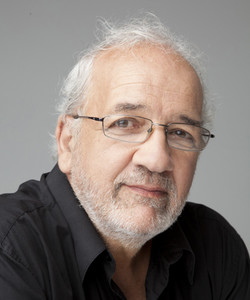
François Tanguay is co-founder of Friends of the Earth Québec and was executive director for Greenpeace Quebec from 1992 to 1997. His work was centered on Climate Change issues, which included attending several United Nations Climate Summits.
An administrative judge to the Quebec Energy Board from 1997 to 2007, he was then named Chair of the Quebec Energy Efficiency Agency. In 2008 he was asked by the Quebec minister of Natural Resources to help create a coalition for the promotion of wood in all sectors of construction.
Mr. Tanguay was nominated in July 2011 to Quebec’s Special Committee for a Strategic Evaluation Assessment on shale gas. He has also worked on humanitarian projects in South Africa and in Peru. From May 2021to November 2025 he was a Director of the Board of the Canadian Energy Regulator. Author of books and essays on environmental issues he was for five years columnist for The Sherbrooke Record on environmental issues. He has served as advisor to elected officials, private business, and labor unions.